Battery Backup for a Refrigerator: How Big a Power Station You Need
Quick Answer
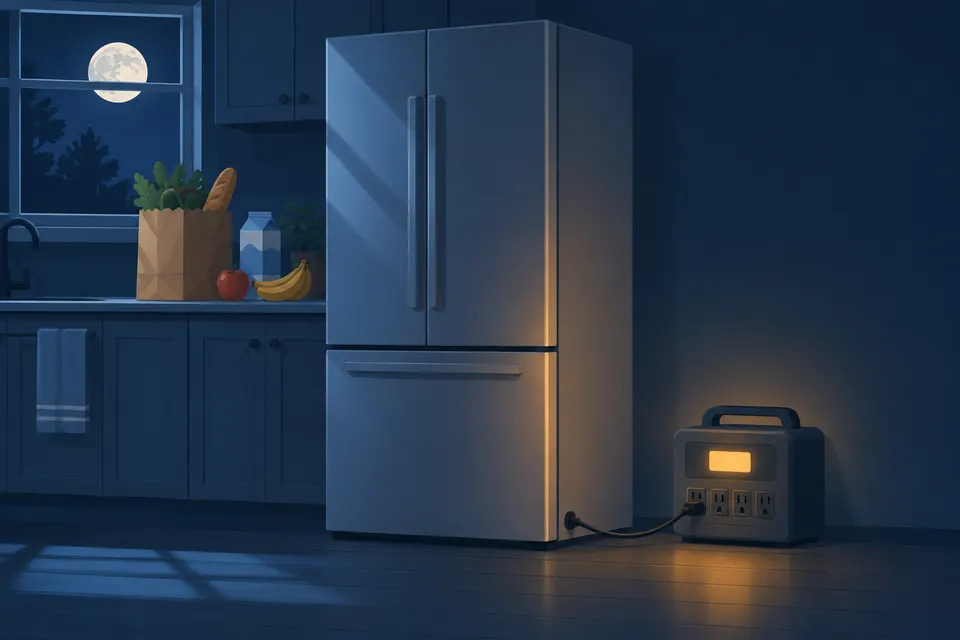
A typical refrigerator can run on a power station with roughly 1,100 Wh for 12 hours, 2,100 Wh for 24 hours and 4,200 Wh for 48 hours, using a 225 W running preset, a one-third duty cycle and our 85% efficiency assumption. A bigger or older fridge can need several times more. Measure yours first.
On this page
Key Takeaways
- A refrigerator needs two numbers: running watts (for energy) and start-up watts (for the inverter). Start-up is about three times running.
- A fridge compressor runs roughly one third of the time, so daily energy is far lower than the nameplate suggests.
- Our planning assumption is 85% inverter efficiency, so the battery must hold about 18% more than the appliance uses.
- Measure your own fridge with a plug-in watt meter or read the label before you pick a capacity.
- USDA says an unopened fridge keeps food cold about 4 hours, so a backup plan matters for outages longer than that.
Models compared by spec
- Capacity
- 1,024 Wh
- Continuous output
- 1,800 W
- Battery type
- LiFePO4
- Expandable
- To 5,000 Wh
- 240V
- No
- Weight
- 27.6 lb
- Capacity
- 2,048 Wh
- Continuous output
- 2,400 W
- Battery type
- LiFePO4
- Expandable
- To 4,096 Wh
- 240V
- No
- Weight
- 41.7 lb
- Capacity
- 2,048 Wh
- Continuous output
- 2,400 W
- Battery type
- LiFePO4
- Expandable
- Yes
- 240V
- No
- Weight
- 45 lb
- Capacity
- 2,073.6 Wh
- Continuous output
- 2,600 W
- Battery type
- LiFePO4
- Expandable
- No
- 240V
- No
- Weight
- 53.35 lb
- Capacity
- 2,764.8 Wh
- Continuous output
- 3,840 W
- Battery type
- LiFePO4
- Expandable
- To 19,354 Wh
- 240V
- Yes
- Weight
- 83.78 lb
- Capacity
- 3,072 Wh
- Continuous output
- 3,600 W
- Battery type
- LiFePO4
- Expandable
- To 12,288 Wh
- 240V
- Linked
- Weight
- 91.5 lb
- Capacity
- 3,072 Wh
- Continuous output
- 3,600 W
- Battery type
- LiFePO4
- Expandable
- No
- 240V
- No
- Weight
- 59.52 lb
- Capacity
- 3,072 Wh
- Continuous output
- 3,600 W
- Battery type
- LiFePO4
- Expandable
- To 15,360 Wh
- 240V
- No
- Weight
- 83.3 lb
- Capacity
- 3,072 Wh
- Continuous output
- 3,600 W
- Battery type
- LiFePO4
- Expandable
- Yes
- 240V
- Linked
- Weight
- 79 lb
- Capacity
- 3,072 Wh
- Continuous output
- 3,600 W
- Battery type
- LiFePO4
- Expandable
- Yes
- 240V
- No
- Weight
- 63.3 lb
- Capacity
- 3,600 Wh
- Continuous output
- 3,600 W
- Battery type
- LiFePO4
- Expandable
- To 10,800 Wh
- 240V
- Linked
- Weight
- 99 lb
- Capacity
- 3,840 Wh
- Continuous output
- 6,000 W
- Battery type
- LiFePO4
- Expandable
- To 26,880 Wh
- 240V
- Yes
- Weight
- 136.7 lb
- Capacity
- 3,993.6 Wh
- Continuous output
- 3,600 W
- Battery type
- LiFePO4
- Expandable
- To 20,000 Wh
- 240V
- Linked
- Weight
- 115.74 lb
- Capacity
- 4,096 Wh
- Continuous output
- 4,000 W
- Battery type
- LiFePO4
- Expandable
- Yes
- 240V
- Yes
- Weight
- 113.54 lb
- Capacity
- 5,040 Wh
- Continuous output
- 7,200 W
- Battery type
- LiFePO4
- Expandable
- Yes
- 240V
- Yes
- Weight
- 134.5 lb
- Capacity
- 5,120 Wh
- Continuous output
- 7,200 W
- Battery type
- LiFePO4
- Expandable
- To 35,800 Wh
- 240V
- Yes
- Weight
- 123.9 lb
- Capacity
- 6,144 Wh
- Continuous output
- 7,200 W
- Battery type
- LiFePO4
- Expandable
- To 30,720 Wh
- 240V
- Yes
- Weight
- —
Specs from manufacturer pages, checked Nov 2026. Each model page links the source of every value. “Linked” 240V means 240V only by pairing two units or with the brand’s hub, not from one unit alone.
No model in our list matches every filter. Clear a filter, or see how expansion batteries and two linked units change the picture on each model page.
Running watts vs start-up watts
A refrigerator compressor is a motor. Virginia Cooperative Extension notes that a meter "will show about three times more current in starting the motor than when it is running smoothly" [1]. That start-up surge lasts a moment, but the power station's inverter must be able to deliver it.
The two numbers do different jobs:
- Running watts decide how much energy (Wh) the fridge uses over time. This sets the battery capacity you need.
- Start-up watts decide whether the inverter can start the compressor at all. This is checked against the station's output rating.
For the worked examples below we use the calculator's refrigerator preset of 225 W running, which gives a start-up estimate of 675 W (3 times running, the motor rule above). Virginia Cooperative Extension's table lists a 16 cubic foot frost-free refrigerator at 725 W, which would imply a start-up near 2,175 W. These are different assumptions, which is why a measurement of your own unit is worth more than either table.
Every model in the table further down lists a continuous output of at least 1,800 W, so the running load is rarely the limit. Surge ratings are published for only some models, so check the spec sheet for yours if the start-up figure is close to the continuous rating.
Why a fridge uses less than its nameplate
A refrigerator does not run flat out around the clock. Virginia Cooperative Extension tells readers to estimate actual running time by dividing the time the refrigerator is plugged in by three, because it cycles on and off [1]. That is a one-third duty cycle.
Daily energy is watts times hours divided by 1,000, the formula Virginia Cooperative Extension gives for kWh [1]. For the 225 W preset: 225 W x 24 h / 3 = 1,800 Wh, or 1.8 kWh a day.
How to find your own fridge's numbers
- Read the label. The rating plate inside the fresh-food compartment usually lists amps and volts. Multiply them for watts. Virginia Cooperative Extension describes the same method: amperes times voltage, typically 120 V [1]. Label values are maximums, not averages.
- Use a plug-in watt meter. A meter that sits between the plug and the outlet shows watts and cumulative kWh. Leave it on for 24 hours with normal door use. Many meters also hold a peak value, which captures the start-up surge.
- Add a freezer if you have one. An ENERGY STAR certified chest freezer uses about 215 kWh a year [3]. Divided by 8,760 hours, that is about 25 W on average.
How many watt-hours do you need?
Battery capacity must cover the appliance energy plus conversion losses. Our planning assumption is 85% inverter efficiency. This is our own assumption, not a government figure. The formula is average watts x hours / 0.85.
| Scenario | Average load | 12 hours | 24 hours | 48 hours |
|---|---|---|---|---|
| Fridge at 225 W running (preset) | 75 W | about 1,060 Wh | about 2,120 Wh | about 4,240 Wh |
| Fridge at 725 W running (VT table) | about 242 W | about 3,420 Wh | about 6,830 Wh | about 13,670 Wh |
| Chest freezer only (25 W) | 25 W | about 350 Wh | about 710 Wh | about 1,410 Wh |
| 225 W fridge plus chest freezer | 100 W | about 1,410 Wh | about 2,820 Wh | about 5,650 Wh |
Two cautions. First, these totals assume you open the door rarely and the room is not unusually hot. Second, a station's usable capacity and the way it handles very low loads vary by model, so treat the totals as a floor and check the manufacturer's runtime notes. The runtime calculator lets you test a specific model against your load, and the home backup sizing tool adds other appliances.
How long is food safe during an outage?
USDA's Food Safety and Inspection Service says a refrigerator will keep food safely cold for about 4 hours if the door stays closed. A full freezer holds its temperature for about 48 hours, and a half-full freezer for about 24 hours [2]. FSIS also advises discarding perishable food that has been above 40°F for two hours or more, and suggests an appliance thermometer to check temperatures.
This is general USDA guidance, not a promise for your kitchen. If you are unsure about a specific food, follow the FSIS guidance or ask your local health department.
Which power stations fit?
The table lists capacities from the manufacturers' spec sheets, as recorded in our database. It is a fit check by capacity, not a ranking. Compare "Expandable max" only if you plan to buy the extra batteries; that figure is the manufacturer's maximum with its add-on packs. "Not confirmed" means we have no verified figure.
| Model | Capacity | Continuous output | Expandable max |
|---|---|---|---|
| BLUETTI Apex 300 | 2,764.8 Wh | 3,840 W | 19,353.6 Wh |
| BLUETTI Elite 200 V2 | 2,073.6 Wh | 2,600 W | not expandable |
| EcoFlow DELTA 3 Plus | 1,024 Wh | 1,800 W | 5,000 Wh |
| EcoFlow DELTA Pro 3 | 4,096 Wh | 4,000 W | not confirmed |
| EcoFlow DELTA Pro Ultra | 6,144 Wh | 7,200 W | 30,720 Wh |
| Goal Zero Yeti PRO 4000 | 3,993.6 Wh | 3,600 W | 20,000 Wh |
| Anker SOLIX C2000 Gen 2 | 2,048 Wh | 2,400 W | 4,096 Wh |
| Anker SOLIX F3800 Plus | 3,840 Wh | 6,000 W | 26,880 Wh |
| OUPES Mega 3 | 3,072 Wh | 3,600 W | 15,360 Wh |
| Jackery Explorer 5000 Plus | 5,040 Wh | 7,200 W | not confirmed |
How to read it against the sizing table above:
- A single fridge for about 12 hours (about 1,060 Wh): the Elite 200 V2, C2000 Gen 2 and larger units list capacities above that on their own.
- A single fridge for about 24 hours (about 2,120 Wh): the Apex 300 and every larger model in the table list capacity above that. The Elite 200 V2 at 2,073.6 Wh lands just under, and the C2000 Gen 2 at 2,048 Wh would need its expansion battery.
- A single fridge for about 48 hours (about 4,240 Wh): by capacity alone, the DELTA Pro Ultra and Explorer 5000 Plus are above it. The DELTA Pro 3 at 4,096 Wh is just under. Several others reach it only with expansion, such as the DELTA 3 Plus (5,000 Wh maximum), Apex 300, F3800 Plus, Yeti PRO 4000 and OUPES Mega 3.
- A 725 W-class fridge for 24 hours (about 6,830 Wh): only expanded configurations of the models with a listed expansion maximum reach this, such as the Apex 300, DELTA Pro Ultra, F3800 Plus, Yeti PRO 4000 and Mega 3.
Brand pages group each maker's lineup: BLUETTI, EcoFlow, Goal Zero, Anker SOLIX, Pecron, OUPES and Jackery. For a wider comparison with filters, see the home backup power station comparison. If you plan to recharge from panels during a longer outage, the solar recharge time tool shows how long a given array takes to refill a battery.
Plugging in safely
Plug the refrigerator directly into the power station's outlet, or through a heavy-duty extension cord rated for the load. Avoid sharing the same station outlet with high-draw items such as a microwave or space heater. If you want the power station to feed your home's circuits, that requires a transfer switch or interlock installed by a licensed electrician. OSHA's generator guidance says never to attach a generator directly to a structure's electrical system unless a qualified electrician has properly installed it with a transfer switch [4]. Never connect a power station to a house outlet with a double-male cord.
Frequently Asked Questions
How long will a power station run a fridge?
Divide the station's usable watt-hours by the fridge's average load. With our 85% assumption and a 225 W running preset at one-third duty, a 2,000 Wh station lasts about 22 hours (2,000 x 0.85 / 75). A fridge that draws more will run for less time.
Do I need a battery backup for a chest freezer too?
If you keep a lot of frozen food, it is worth including. A chest freezer is a small load (about 25 W on average for an ENERGY STAR model), and USDA says a full freezer holds its temperature about 48 hours with the door closed, so many people prioritize the fridge first.
Will the start-up surge trip the station?
It can if the station's surge or continuous rating is too close to the start-up estimate (about three times running watts). Check the spec sheet for a surge rating. Not every manufacturer lists one.
Should I keep opening the fridge during an outage?
USDA's guidance on holding times assumes the doors stay closed. Opening them often shortens those times and raises your energy use.
Our Take
For most households the fridge is the first appliance to protect, and it is a modest load. The sizing question is mostly about hours: a 24 hour plan needs roughly 2,000 Wh for an efficient fridge, and a 48 hour plan needs double that, before you add lights, a router or a freezer. We would measure the fridge for a day with a watt meter before choosing, then add a margin and decide whether a station that expands later makes more sense than a single large one. The capacities here are manufacturer figures from spec sheets.
Sources
- Estimating Appliance and Home Electronic Energy Use (2901-9014). Virginia Cooperative Extension, 2026.
- Keep Your Food Safe During Emergencies. USDA Food Safety and Inspection Service, 2026.
- Freezers. ENERGY STAR, 2026.
- Fact Sheet FS-3286: Generator Safety. OSHA, 2005.
General information, not electrical, medical or safety advice. Wattages are typical figures; check the label on your own appliance. Connecting backup power to home wiring needs a transfer switch or interlock installed by a licensed electrician. Spotted an error? Tell us.
More Home Backup Guides
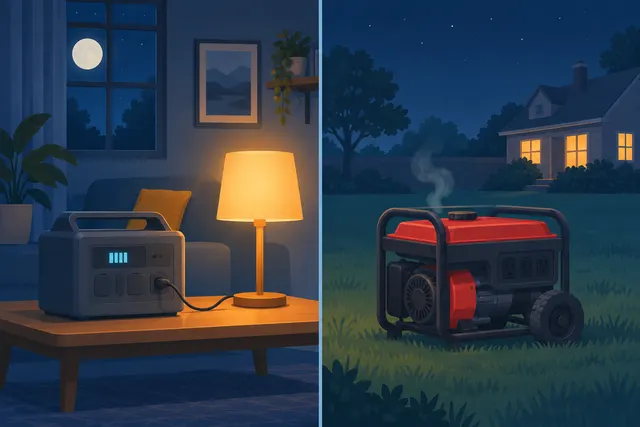
Power Station vs Generator for Home Backup: How to Choose
Portable power station vs generator for home backup: energy versus fuel, surge, indoor use, carbon monoxide rules, upkeep and wiring, plus a decision flow.
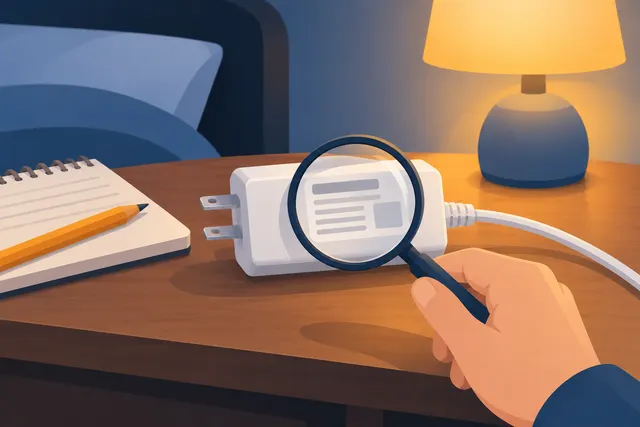
Backup Power for Medical Devices: How to Check the Power Draw
How to find the watts on your home medical equipment label, turn them into watt-hours for an outage, and what to ask your provider and utility first.
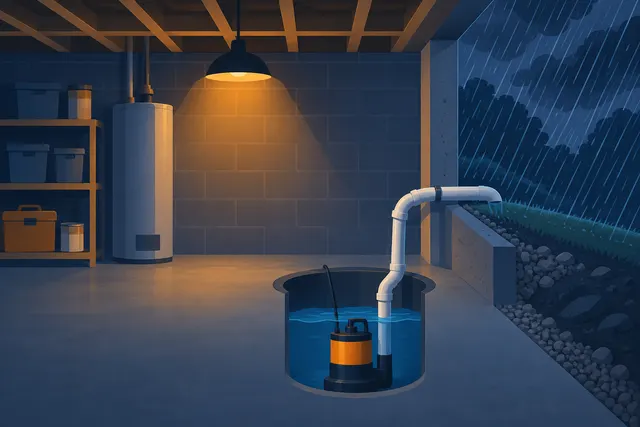
Backup Battery for Sump Pump: Dedicated System or Power Station?
Compare a dedicated battery backup sump pump with running your existing pump from a home power station, with the watts, surge and Wh math shown.
Portable Power Station for a Gas Furnace: What Size Do You Need?
A gas furnace still needs electricity for its blower and controls. See how many watt-hours 12, 24 and 48 hours take, and what the hookup requires.