How to Connect a Power Station to Your House: The Safe Options Overview
Quick Answer
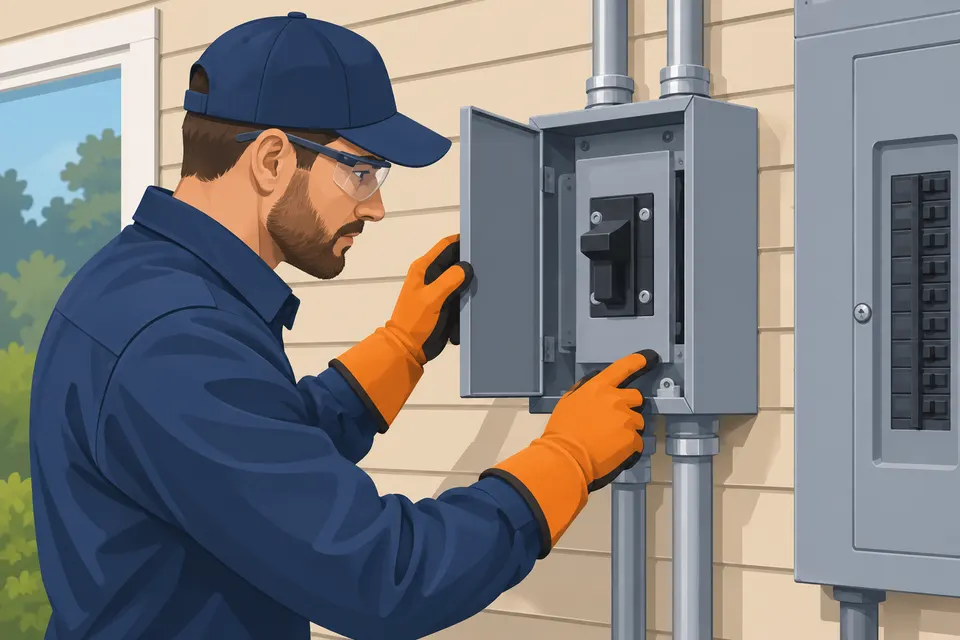
You can power appliances directly with properly rated cords, or have a licensed electrician install a transfer switch or an interlock kit with an inlet box so selected circuits run from the station. Some makers also sell home panels or hubs. Never backfeed through a wall outlet. This guide is an overview, not installation instructions.
On this page
- What are the ways to connect a power station to a house?
- Can you just run extension cords to your appliances?
- What do a manual transfer switch and an interlock kit do?
- Which station outlets connect to these setups?
- What about maker home panels and hubs?
- Why are permits, inspection and a licensed electrician needed?
- Why is backfeeding through a wall outlet dangerous?
- Frequently Asked Questions
- Our Take
- Sources
Key Takeaways
- There are four common ways to use a power station at home: rated extension cords to individual appliances, a manual transfer switch, a generator interlock kit with an inlet box, and a maker-specific home panel or hub.
- Anything that feeds your home's wiring needs a licensed electrician, and in many places a permit and inspection.
- Never plug a power station into a wall outlet to power the house. That is backfeeding, and it can energize utility lines and endanger line workers.
- Check the station's outlet types first. A 120V-only outlet such as a TT-30R and a 120/240V outlet such as an L14-30R or 14-50R are not interchangeable choices.
What are the ways to connect a power station to a house?
Homeowners usually end up with one of four setups. Each trades convenience against cost, permitting and the outlets your station actually has.
| Option | What it is | Station outlet it typically uses | Who does the work | Permit and inspection |
|---|---|---|---|---|
| Rated extension cords | Appliances plug into the station through cords rated for the load | 120V outlets (5-20R or similar) | You, using rated cords | None for the cord itself |
| Manual transfer switch | A switch at your panel that selects utility or station power for chosen circuits | Often a 120V TT-30R or a 120/240V L14-30R, depending on the switch and station | Licensed electrician | Commonly required; ask your local building department |
| Interlock kit with inlet box | A mechanical device at the panel plus an outdoor inlet, so the main breaker and the station feed cannot both be on | Same outlet types as above | Licensed electrician | Commonly required; ask your local building department |
| Maker home panel or hub | A maker's own accessory that links units or ties them to the home | Depends on the maker; check the product documentation | Follow the maker's rules; expect an electrician | Depends on the install |
Whichever route you pick, the electrical code in your area governs it. We point you to "your local electrical code" rather than quote a section number, because adopted code editions vary by state and city.
Can you just run extension cords to your appliances?
Yes, and for many outages it is the simplest approach: appliances plug into the station through cords, and nothing touches your wiring. OSHA's portable generator fact sheet says to plug appliances directly into the power source using the manufacturer's supplied cords or grounded (3-pronged) extension cords, and that cords should be "appropriately rated in watts or amps for the intended use" [1]. The same sheet is written for generators, but the cord rule applies to any power source.
The Consumer Product Safety Commission adds that overheating is usually caused by overloading or connecting appliances that consume more watts than the cord can handle, that you can find a cord's rating on its tag or packaging, and that extension cords should only be used temporarily [2]. It also says never to alter a cord or tape up damaged insulation, and to use outdoors only a cord marked for outdoor use.
The limit is practical: cords reach only what you can plug in. Hardwired loads such as a furnace blower or a well pump do not have a plug. For those you need one of the options below.
For a station used with cords, the number of standard outlets matters more than the 240V ports. For example, the manufacturer lists 4× 120V 20A outlets on the BLUETTI Apex 300, 4× NEMA 5-20R on the EcoFlow DELTA Pro 3, and 6× NEMA 5-20R on the Anker SOLIX F3800 Plus.
What do a manual transfer switch and an interlock kit do?
A manual transfer switch lets an electrician wire a few chosen circuits so they run from either the utility or the station, but never both at once. Eugene Water & Electric Board describes a transfer switch as allowing power from only one source at a time, and says a portable generator connection requires a UL-approved transfer switch or interlock [4]. OSHA says never to attach a generator directly to a structure's electrical system "unless a qualified electrician has properly installed the generator with a transfer switch" [1].
Because the switch carries only selected circuits, you decide in advance which loads the station can handle. The home backup sizing tool helps you total those loads before you talk to an electrician.
An interlock kit is a mechanical device at your main panel that stops the main breaker and a backup-power breaker from being on together. The inlet box is a weatherproof receptacle on the outside wall where the station connects. EWEB lists a UL-approved transfer switch or interlock as the accepted ways to connect a portable generator and notes that manufacturers usually require licensed installation [4].
Interlock kits are made for specific panel brands and models. Which one fits and how it is installed are decisions for your electrician and your local electrical code, not for a guide like this one.
Which station outlets connect to these setups?
Home connections are built around higher-power outlets, not the standard 120V household sockets. The outlet types on the station decide which options are open. The table uses only the manufacturer outlet data in our spec database; a blank means we have no confirmed figure.
| Station | Outlets listed by the manufacturer | 240V status |
|---|---|---|
| BLUETTI Apex 300 | 1× NEMA TT-30R, 1× NEMA 14-50R (120/240V) | Native |
| EcoFlow DELTA Pro 3 | 1× TT-30R (120V), 1× L14-30R (120/240V), 1× 6-20R (240V) | Native |
| Anker SOLIX F3800 Plus | 1× TT-30R, 1× L14-30R (120/240V) | Native |
| Jackery Explorer 5000 Plus | 1× L14-30R, 1× 14-50R (120/240V) | Native |
| Pecron F5000LFP | 1× TT-30R, 1× L14-30R (120/240V) | Native |
| Anker SOLIX F3000 | 1× TT-30R (all 120V) | Linked: two units with Anker's Double Voltage Hub |
| Jackery HomePower 3000 | 1× TT-30R (120V 30A) | No (120V only) |
A TT-30R is a 120V outlet, so it feeds 120V circuits. An L14-30R or 14-50R delivers 120/240V, which is what a panel with 240V loads would need. A station with only 120V output cannot run 240V appliances unless the maker offers a linking accessory, as noted on the model pages. Pairing a specific station with a specific switch or inlet is a question for your electrician and the maker's documentation.
What about maker home panels and hubs?
Several makers sell their own accessories to link units or tie a station into a home. We describe them only in general terms here: they exist, their details differ by brand, and each maker's installation rules apply. Read the maker's official page for the exact model you are considering, and expect that any connection to your home wiring still goes through a licensed electrician and your local permitting process. Browse the EcoFlow brand page or the home backup power station comparison to see which models list linking options.
Why are permits, inspection and a licensed electrician needed?
Because a mistake can energize things you cannot see. The Oregon Building Codes Division says its electrical code requires a transfer switch or other safety devices to prevent unsafe back feeding, and that this work requires a permit and should only be done by a properly licensed electrician [3]. EWEB likewise says such installations must be permitted, inspected and approved under the electrical code and local, county and state requirements [4].
Rules differ by state and city, and OSHA's own wording is "qualified electrician". Call your local building department before you buy a switch or inlet, and ask the electrician what permit applies. The words to look for are "licensed electrician" and your local electrical code.
Why is backfeeding through a wall outlet dangerous?
Backfeeding means pushing power into your home wiring through an ordinary outlet. OSHA warns that attaching a generator directly to a building's system without a properly installed transfer switch "can energize wiring systems for great distances" and creates a risk of electrocution for utility workers and others in the area [1]. Dominion Energy adds that transformers can step the backfeed up to a level "enough to kill a utility lineman making repairs, even if he's far from your house," and that the only safe way to connect to existing wiring is to have a licensed electrical contractor install a transfer switch [5]. Oregon BCD also notes the danger to the property owner when removing the connection once normal power returns [3].
Never use a homemade cord with two male plugs, and never plug a station into a wall outlet to power circuits. If you want house circuits powered, use one of the installed options above, done by a licensed electrician.
Frequently Asked Questions
Can I plug a power station into a wall outlet to power my house?
No. That is backfeeding. OSHA says it can energize wiring for great distances and endanger utility workers [1].
Do I need a transfer switch for a power station?
Only if you want it to power house circuits. If appliances plug directly into the station with properly rated cords, no connection to your wiring is made. Connecting to the home through a transfer switch or interlock should be done by a licensed electrician.
Is an interlock kit the same as a transfer switch?
No, they are different devices that serve the same safety goal. EWEB lists a UL-approved transfer switch or interlock as the accepted connection methods [4]. Which suits your panel is your electrician's call.
Do I need a permit?
Often, yes. Oregon BCD states that this work requires a permit in Oregon [3]. Ask your local building department.
Which station outlet do I need?
It depends on the switch or inlet your electrician specifies. Check the outlet list on the station's model page and tell your electrician what it has.
Our Take
We think the cord route is the sensible first step for most renters and anyone with a short list of plug-in loads. For homeowners who want a furnace, well pump or whole circuits on backup, we would plan the home connection with a licensed electrician before choosing a station, because the outlets on the station and the panel need to agree. Start with the loads you need to run using the sizing tool, then pick a connection method, and only then compare models. This is our view, not a test result.
Sources
- Using Portable Generators Safely (FS-3286). OSHA, 2005.
- Household Extension Cords Can Cause Fires (Publication 5032). U.S. Consumer Product Safety Commission, 2012.
- Electrical Safety: Generator Connections. Oregon Building Codes Division, 2021.
- Generator Safety. Eugene Water & Electric Board, 2026.
- Generator Safety. Dominion Energy, 2025.
General information, not electrical, medical or safety advice. Wattages are typical figures; check the label on your own appliance. Connecting backup power to home wiring needs a transfer switch or interlock installed by a licensed electrician. Spotted an error? Tell us.
More Home Backup Guides
Power Outage Checklist: How to Prepare Before, During and After
A practical power outage checklist for US homeowners: what to do before, during and after an outage, plus how to size backup power for your critical loads.
Winter Storm Power Outage Backup: How to Size a Home Battery Plan
Plan backup power for a winter storm outage: which loads matter, why space heaters drain batteries fast, 48-hour sizing math, cold limits and safe placement.
LiFePO4 vs NMC for a Home Backup Power Station
LiFePO4 vs NMC for home backup: why maker cycle ratings (to 80% or to 70%) are not comparable, plus weight, thermal behavior, cold charging and storage.